- Previous potassium levels, medicines (ACEI, NSAIDs, KCL supplements), medical illnesses
(AKI, sepsis, hypotension, rhabdo, tumor lysis, hemolysis e.g. sickle cell
disease/crisis), EKG changes
- Is the specimen hemolyzed?
-
The most serious manifestations of hyperkalemia are muscle weakness or
paralysis, cardiac conduction abnormalities, and cardiac arrhythmias,
including sinus bradycardia, sinus arrest, slow idioventricular rhythms,
ventricular tachycardia, ventricular fibrillation, and asystole.
- Recognize that acute changes in potassium are more serious than absolute levels
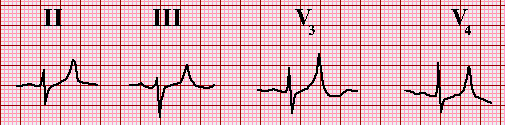
Figure
1
A tall peaked and symmetrical T wave is the first change seen on the
electrocardiogram (ECG) in a patient with hyperkalemia
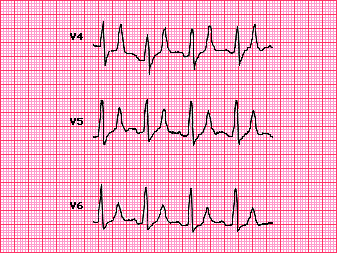
Figure
3
Lateral precordial leads showing peaked, narrow (tented) T waves and
prolongation of the QRS complex (0.14 to 0.16 seconds) associated with
moderate to severe hyperkalemia.